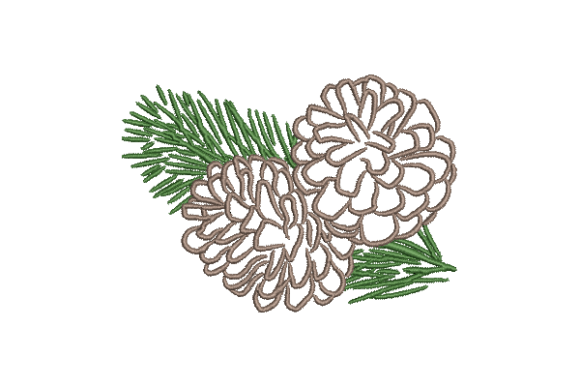
Elegant Pinecone Machine Embroidery Review
As an experienced embroidery designer who has reviewed thousands of digital files for commercial production, I often see designs that look beautiful on a screen but fail when stitched onto real-world merchandise. Today, I am reviewing the Elegant Pinecone Machine Embroidery file with a specific focus on its viability for small business owners, branded patches, and custom apparel. This review moves beyond simple decoration to analyze how this design performs as a functional brand asset in a competitive market.
First Impressions: Visual Personality and Brand Fit
The title Elegant Pinecone Machine Embroidery immediately sets a tone of sophistication and seasonal warmth. Unlike generic holiday motifs that can feel cluttered or overly festive, this design promises a refined aesthetic suitable for high-end home decor and professional branding. The description highlights its suitability for pillows and textile bags, suggesting a balanced composition that works well on flat surfaces.
For a small business owner, the visual personality of a design is critical. Does it feel rustic, premium, playful, or modern? Based on the name and typical execution of pinecone motifs, this design leans towards a classic, elegant, and slightly rustic vibe. It feels handmade yet polished, making it an excellent choice for boutique shops, artisanal bakeries, florists, and creative studios that want to convey quality and attention to detail without being loud or aggressive.
Real-World Application for Small Business Merchandise
The true test of any machine embroidery design lies in its versatility across different product categories. I have evaluated how Elegant Pinecone Machine Embroidery could integrate into various commercial projects:
- Embroidered Patches: This design has strong potential as a woven or embroidered patch. Its natural shape allows for clean edge finishes, making it ideal for application on denim jackets, backpacks, or as a standalone logo element on tote bags.
- Staff Uniforms and Aprons: For cafes, bakeries, or retail boutiques, this design serves as a perfect chest logo accent. It adds a touch of seasonal charm to staff aprons and work shirts without overwhelming the wearer's comfort or mobility.
- Cap and Hat Embroidery: The compact nature of a pinecone makes it suitable for cap fronts. However, curvature must be considered during digitizing to ensure the design does not distort on the curved surface of a hat.
- Tote Bag Design: As mentioned in the product description, this file looks stylish on textile bags. A single centered placement creates a sophisticated brand mark that customers are proud to carry, effectively turning shoppers into walking billboards.
- Product Packaging Accents: Small businesses often overlook packaging. Using this design on gift tags, box lids, or garment labels can elevate the unboxing experience and reinforce brand identity.
Strategic Placement for Maximum Impact
When integrating Elegant Pinecone Machine Embroidery into your small business merch, placement is key. For custom apparel, consider using it as a sleeve detail or a back-of-neck label. On tote bag design projects, placing it centrally or offset to the side can create a dynamic look. For apron embroidery, the chest pocket area offers a prime location for a subtle yet professional accent.
This design also excels as a branded product add-on. Imagine a pet brand selling winter accessories or a local shop offering holiday gift sets. Adding this motif to the final finished product signals that the item was crafted with care, increasing perceived value and customer trust.
Critical Considerations and Potential Pitfalls
While the design is promising, there are specific scenarios where caution is required. Not every embroidery file translates perfectly to every fabric or surface. Here are areas where you should exercise careful judgment:
- Small Patch Sizes: If you intend to use this as a tiny patch (under 2 inches), check the stitch density closely. Intricate details may blur together if scaled down too far.
- Curved Surfaces: Cap embroidery requires specific digitizing adjustments. Without proper underlay and tension control, the design may pucker or lose definition on the curve.
- Detailed Outlines: If the design features fine lines or tiny lettering, verify that these elements will hold up after frequent washing. High stitch density can make fabric stiff, which might be uncomfortable on items like caps or fitted shirts.
- Fabric Texture and Color: Dark uniforms require high contrast thread colors to ensure the design remains visible. Textured fabrics like heavy wool or fleece may hide the intricacies of the thread colors used in the file.
Impact on Brand Identity and Customer Perception
In the world of commercial embroidery, consistency is everything. A cohesive visual language builds brand identity and fosters customer recognition. Using a high-quality, professionally digitized file like Elegant Pinecone Machine Embroidery signals professionalism. It tells your customers that you invest in quality materials and craftsmanship.
Conversely, poorly executed embroidery can damage credibility. A design that is too dense, misaligned, or uses low-contrast threads can make a brand appear cheap or careless. By selecting a design that balances elegance with durability, you enhance product value and encourage buyer engagement. When a customer sees a crisp, well-stitched pinecone on a tote bag or uniform, they associate that quality with the entire business.
Practical Designer Notes for Production
Before committing to a large production run, follow these essential steps to ensure success with your digital embroidery file:
- Test in Black and White: Create a monochrome mockup to evaluate the balance and spacing of the design without the distraction of color.
- Check Stitch Density: Review the file settings to ensure the density is appropriate for the intended fabric. Too much stitching can cause puckering, while too little can leave gaps.
- Verify Thread Colors: Ensure the chosen thread palette contrasts well with your base fabric. Test multiple color combinations to find the most visually appealing option.
- Inspect Spacing and Hoop Size: Confirm that the design fits within your standard hoop size for the target products. Large designs may require multi-hoop setups, which increases production time.
- Use Proper Stabilizer: Select the correct stabilizer for your fabric type. A sturdy backing is crucial for maintaining the shape of the design, especially on stretchy or delicate materials.
- Create a Printable Mockup: Before stitching, generate a printable mockup for client approval. This helps visualize the final result on actual merchandise.
- Confirm Commercial Licensing: Always verify the licensing terms. Ensure you have the right to use the design for commercial embroidery projects, including resale of finished goods.
Finally, remember that the description mentions the design is perfect for home decor and textile bags. While this is true, do not assume it will automatically perform well on all items without testing. Compare it beside other design assets in your library to ensure it aligns with your overall aesthetic. If the file lacks specific technical details like exact stitch counts or recommended formats, contact the provider or test extensively before full-scale production.
By treating Elegant Pinecone Machine Embroidery as a strategic tool rather than just a decorative element, you can leverage its elegance to build a stronger, more recognizable brand. Whether for a handmade product line or a corporate uniform program, this design offers a versatile foundation for creating memorable, high-quality merchandise.