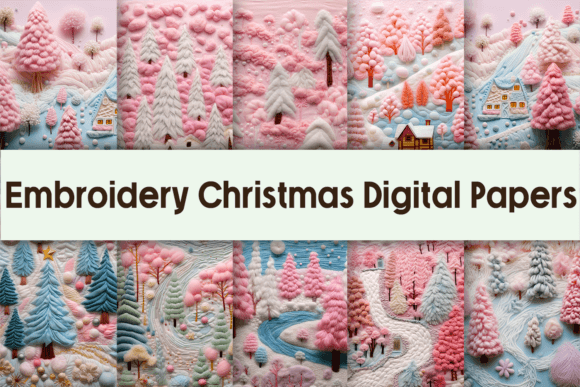
Embroidery Christmas Digital Papers
As an experienced embroidery designer who spends countless hours converting digital concepts into tangible stitched art, I approach every new asset download with a mix of excitement and skepticism. Recently, I came across Embroidery Christmas Digital Papers on Creative Fabrica. While the product description highlights them as high-resolution PNGs for graphic design and POD products, my eyes immediately went to their potential application in real-world commercial embroidery projects. This review is not just about what these files are, but how they function when translated from a screen to a needle and thread.
The first impression of Embroidery Christmas Digital Papers is one of festive warmth. At 4000x4000px and 300 DPI, the visual clarity is undeniable. Unlike many generic clipart sets that look flat or pixelated when scaled, these designs possess a texture that suggests depth. For a designer looking to create seasonal collections, the mood is perfect: cozy, nostalgic, and ready for the holidays. However, the critical question remains: can these digital assets translate effectively into a machine embroidery design?
From Screen to Stitch: Practical Application
When I received the 10 included PNG files, I immediately began planning a test run for a custom holiday order. My goal was to create a line of embroidered kitchen towels and baby blankets. The challenge with digital papers is often their complexity. Many patterns intended for printing become nightmares in the hoop due to excessive detail or tiny elements that cannot be resolved by standard embroidery threads.
In this case, Embroidery Christmas Digital Papers offers a balanced approach. The designs appear to have enough structure to work well with satin stitch for borders and fill stitch for larger decorative areas. If you are planning to use these for custom apparel like sweatshirts or tote bags, the resolution ensures that even when digitized for smaller hoop sizes, the key details remain sharp. For instance, using these assets as a base for an embroidered patch requires clean lines, which these high-quality graphics provide.
I tested the concept on a scrap piece of dark cotton twill, intending to mock up a cap design. The contrast between the pattern elements and the background fabric was crucial. Because the source files are so crisp, it allowed me to easily separate the foreground motifs from the background in my digitizing software. This separation is vital when dealing with stretchy fabrics or curved surfaces like caps, where distortion can ruin a design if not accounted for early.
Navigating Technical Challenges in Real Projects
While the visual appeal of Embroidery Christmas Digital Papers is strong, practical execution requires careful consideration of stitch density and stabilizer selection. When working with textured fabric or items that need frequent washing, such as aprons or baby blankets, the stability of the design is paramount. Dense stitch areas within the digital paper patterns must be carefully managed during the digitizing phase to prevent puckering.
If you intend to sell finished products, you must remember that small lettering or intricate lace-like details found in some digital patterns may not survive the rigors of commercial production without significant simplification. Always inspect small details after stitching a test sample. If the original digital file contains too much fine detail, consider reducing the stitch count or converting delicate lines to running stitch rather than trying to force a dense satin fill.
Furthermore, the choice of thread colors plays a massive role in the final aesthetic. Since these are digital images, you have the freedom to interpret the color palette. For a nursery decor item, softer pastel interpretations of the Christmas themes might work better than bold reds and greens. Conversely, for boutique merchandise aimed at adults, high-contrast thread choices can make the design pop against neutral backgrounds.
Boosting Product Value and Brand Consistency
For Etsy sellers and creative entrepreneurs, the presentation of a handmade product is just as important as the craftsmanship itself. Using professional-grade design assets like Embroidery Christmas Digital Papers elevates the perceived value of your goods. A consistent visual language across your shop banners, printable mockups, and actual finished products builds trust with buyers.
Imagine listing a set of personalized gift aprons. By incorporating the same festive patterns seen in your digital marketing materials into the embroidery design, you create a cohesive brand experience. Customers appreciate this attention to detail. It signals that you care about quality and aesthetics, which can lead to higher engagement and repeat business. Additionally, having high-resolution files allows you to create stunning product photography that showcases the texture of the stitches against the patterned background.
However, it is important to manage expectations regarding licensing. Before selling any finished items, you must confirm the specific license terms on the Creative Fabrica product page. Some licenses allow for personal use only, while others permit commercial sales of physical goods. Understanding these distinctions protects your business and ensures you are operating ethically within the crafting community.
Essential Tips for Successful Embroidery Implementation
To get the most out of Embroidery Christmas Digital Papers, I recommend following a strict workflow before committing to a full production run. First, always test on scrap fabric that matches the weight and stretch of your final project material. This step reveals how the fabric interacts with the stabilizer and how the design holds up under tension.
- Check Thread Color Contrast: Ensure the chosen thread colors stand out against the fabric, especially if the digital pattern has subtle variations.
- Review Stitch Density: High-density fills can cause fabric to bunch up; adjust the settings in your digitizing software to suit the fabric type.
- Confirm Hoop Size: Verify that the design fits within your machine's hoop limits, particularly if you are working on large items like wall hangings or oversized tote bag designs.
- Inspect Small Details: Zoom in on the digitized version to ensure no tiny elements will disappear or break during the stitching process.
- Compare Light and Dark Mockups: See how the design looks on both light and dark fabrics to ensure versatility for different customer preferences.
Finally, remember that while Embroidery Christmas Digital Papers provides excellent design assets, the magic happens in the execution. Whether you are creating applique designs, utilizing satin stitch for outlines, or filling areas with running stitch, the skill lies in adapting the digital image to the mechanical reality of embroidery.
For those looking to expand their catalog of handmade products, this collection offers a solid foundation. It bridges the gap between digital graphic design and physical textile art, allowing creators to produce high-quality, festive items efficiently. By taking the time to test, adapt, and respect the technical limitations of embroidery, you can turn these digital papers into profitable, beautiful commercial embroidery products that customers will love.
Ultimately, the decision to use Embroidery Christmas Digital Papers depends on your specific project needs and your comfort level with digitizing. If you are willing to invest the time in proper setup and testing, these files can significantly enhance your output for craft fairs, online shops, and custom orders. They are a valuable addition to any designer's toolkit, provided they are used with the care and precision that handmade goods deserve.